News about mexican freshwater fishes
By Juan Miguel Artigas Azas (10-Jun-2026)
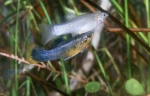
A new study published in Nature explores how the Amazon molly, Poecilia formosa, has persisted for more than 100,000 years despite reproducing clonally. The article, led by Edward S. Ricemeyer, Nathan K. Schaefer, Manfred Schartl, and Wesley C. Warren, examines a long-standing puzzle in evolutionary biology: why a species that does not reproduce sexually has not suffered the genomic decline predicted by theory.
Poecilia formosa is an all-female fish of hybrid origin, descended from an ancient cross between Poecilia mexicana and Poecilia latipinna. Because it produces daughters that are essentially genetic copies of their mothers, it lacks the usual genetic reshuffling that sexual reproduction provides. That reshuffling normally helps natural selection remove harmful mutations and spread useful ones.
Using high-quality genome assemblies, the researchers separated the two ancestral halves of the Amazon molly genome and compared them with the genomes of its sexual relatives. They found that the clonal genome has indeed accumulated changes faster than those of the sexual species. Surprisingly, however, this has not produced the expected genetic decay.
The key appears to be gene conversion, a DNA repair-like process in which one genetic copy can overwrite another. In Poecilia formosa, gene conversion seems to help remove harmful mutations, preserve useful variation, and reduce problems caused by its hybrid origin.
The study does not suggest that sex is unimportant in evolution. Instead, it shows that some clonal animals may have unexpected genomic tools that allow natural selection to continue working. For aquarists and naturalists, the Amazon molly is more than a biological curiosity: it is a living reminder that evolution often keeps a spare trick hidden in the filter box.
Ricemeyer, Edward S & Nathan K. Schaefer, Kang Du, Irene da Cruz, Susanne Kneitz, Rafael D. Acemel, Darío G. Lupiáñez, Rachel A. Carroll, Rosie Drinkwater, Manfred Schartl, Wesley C. Warren. 2026. "Gene conversion empowers natural selection in a clonal fish species". Nature. (652):398–404 - [abstract] · (ffm01333)
By Juan Miguel Artigas Azas (14-Aug-2025)
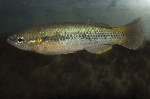
A new species of freshwater killifish, Profundulus hectori, has been described from the upper Mexcalapa River basin and rivers of the Isthmus of Tehuantepec, in southeastern Mexico. The discovery, published in the journal Neotropical Ichthyology, adds to the growing knowledge of Mesoamerican freshwater biodiversity and highlights the region's ecological importance and fragility.
The authors of the study, all based in Mexico, used a combination of morphological characteristics and genetic data to confirm the species' distinctiveness. With this addition, the genus Profundulus now comprises 12 valid species, all endemic to Mesoamerica.
Profundulus hectori is distinguished by a set of large black spots located on the scales along the sides of the body, many of which are at least half the diameter of the eye. This characteristic sets it apart from all other known species in the genus. It also exhibits a higher count of scales along the lateral line and in front of the dorsal fin.
Genetic analysis using mitochondrial DNA revealed a divergence of at least 3.86% compared to other Profundulus species, supporting its recognition as a separate species. Phylogenetic results place P. hectori as sister species of P. chimalapensis, in a clade with P. punctatus, and P. oaxacae.
The specific name hectori honors the late Dr. Héctor Espinosa Pérez, a renowned Mexican ichthyologist affiliated with the Instituto de Biología at UNAM. The authors recognize Dr. Espinosa for his extensive contributions to the study of Mexican freshwater fishes and his mentorship of new generations of researchers.
The species is currently known from a limited number of localities in the Río Mezcalapa and adjacent basins in eastern Chiapas. These rivers are generally clear, cool, and moderately to strongly flowing, with gravel and rocky substrates. While some of these habitats remain in good condition, others face threats from pollution, habitat modification, and human development.
Domínguez-Cisneros, Sara Elizabeth & Ernesto Velázquez-Velázquez, Omar Domínguez-Domínguez, Rosa Gabriela Beltrán-López. 2025. "A new species of Profundulus (Cyprinodontiformes: Profundulidae) from southeastern Mexico". Neotropical Ichthyology. 23(2): - [abstract] · (ffm01319)
By Juan Miguel Artigas Azas (30-Jul-2025)
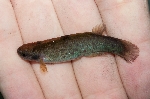
After being lost to science for nearly 90 years, the rare killifish Cynodonichthys myersi has been rediscovered in the mangroves of northern Yucatán. Originally described in 1936, it was later thought to be the same species as C. tenuis, but new research confirms it’s a distinct species. DNA analysis shows that C. myersi is actually more closely related to species found far away in Panama than to its Mexican neighbors, suggesting a surprising and separate evolutionary path. With its unique coloration—males have blue-green hues with dark spots and females have speckled tails—and a possible ability to survive briefly out of water, this rediscovered fish adds a fascinating twist to the story of Central American freshwater biodiversity.
Dominguez-Castanedo, Omar & Stefano Valdesalici, Waldir M. Berbel-Filho, Liliana García-Calva, Sharon Valdez-Carbajal. 2025. "Rediscovery and redescription of Cynodonichthys myersi from the mangroves of northern Yucatan Peninsula, Mexico (Cyprinodontiformes, Rivulidae)". Journal of Fish Biology. 1–11 - [abstract] · (ffm01307)
By Juan Miguel Artigas Azas (25-Oct-2021)
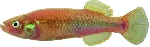
A new species of killifish in the genus Profundulus has been described in the journal Ichthyology & Herpetology 109(4):949–957 2021 by Sara E Dominguez-Cisneros, Ernesto Velázquez-Velázquez, Caleb D. McMahan, and Wilfredo A. Matamoros.
The new species significantly extends the known distribution of Profundulus in the Atlantic slope of Mexico to the upper reaches of the Papaloapan drainage in Oaxaca [México], from which Profundulus until now wasn’t known. The new species has been given the name Profundulus adani, to honor the Mexican ichthyologist Adán E. Gómez González, who tragically passed away in January 2018. P. adani is diagnosed from all congeners by the absence of a humeral spot in individuals larger than 45 mm SL.
Dominguez-Cisneros, Sara E & Ernesto Velázquez-Velázquez, Caleb D. McMahan, Wilfredo A. Matamoros. 2021. "A new species of killifish of the genus Profundulus (Atherinomorpha: Profundulidae) from the upper reaches of the Papaloapan River in the Mexican state of Oaxaca". Ichthyology & Herpetology. 109(4):949–957 - [abstract] · (ffm01006)
By Juan Miguel Artigas Azas (05-Feb-2020)
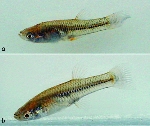
A new species of livebearer fish: Poeciliopsis jackschultzi from the state of Sonora in Mexico has been recently described by Kevin Conway, Mariana Mateos and Robert C. Vrijenhoek in the journal Zookeys. The new species is currently only known from four sites in the Río Concepción, where it is sympatric with P. occidentalis. It is mainly diagnosed by the absence of a black spot at base of the frontal part of the dorsal fin on males, unique in the Leptorhaphis species group of Poeciliosis. The specific name is given to honor Jack Schultz, a pioneer of studies on hybridization and all-female reproduction in Poeciliopsis.
Conway, Kevin W & Mariana Mateos, Robert C. Vrijenhoek. 2019. "A new species of the live-bearing fish genus Poeciliopsis from northern Mexico (Cyprinodontiformes, Poeciliidae)". Zookeys. (883):91-118 - [abstract] · (ffm00905)